A search for free printable Native American beading patterns can flatten many living artistic traditions into one generic label. The Smithsonian’s National Museum of the American Indian documents beadwork from numerous nations and regions, with designs connected to individual makers, families, materials, histories, and community meanings. A pattern should not be labeled “Cherokee,” “Lakota,” “Navajo,” or another nation without reliable attribution and permission.
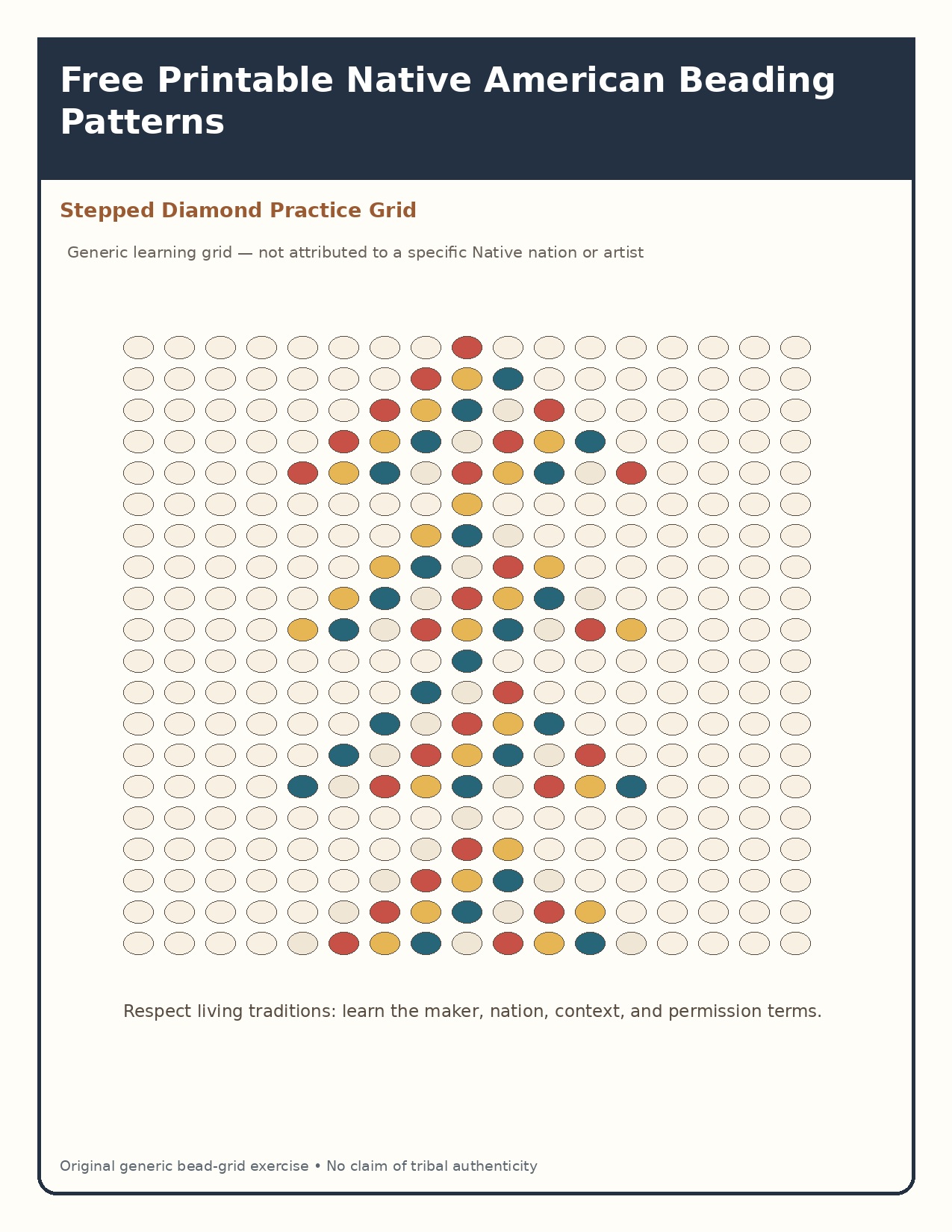
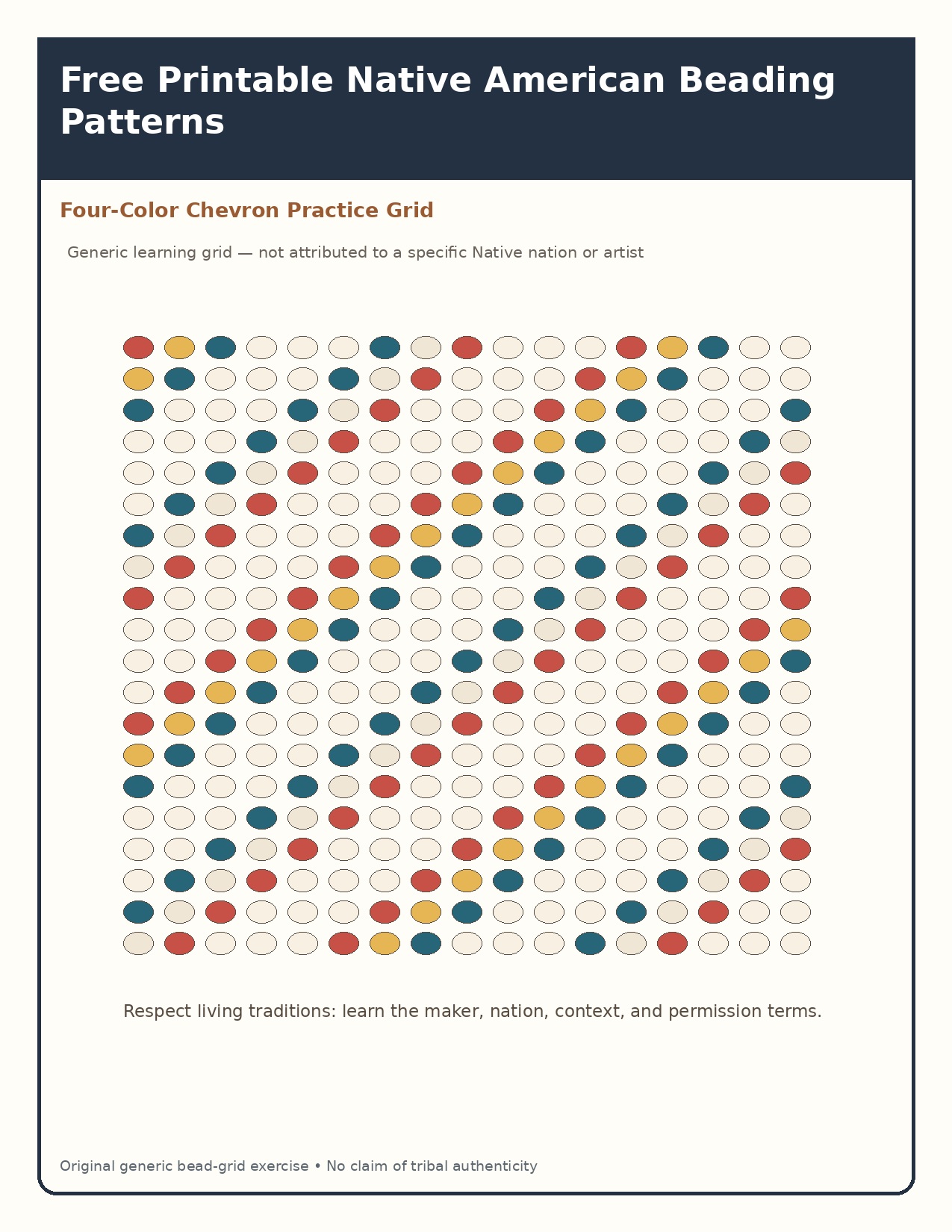
The three downloads here are therefore generic bead-grid exercises. They are not copies of museum objects, ceremonial designs, or the work of a Native artist, and they make no claim of tribal authenticity.
Three bead-grid practice sheets
Stepped-diamond generic practice grid
Four-color chevron generic practice grid
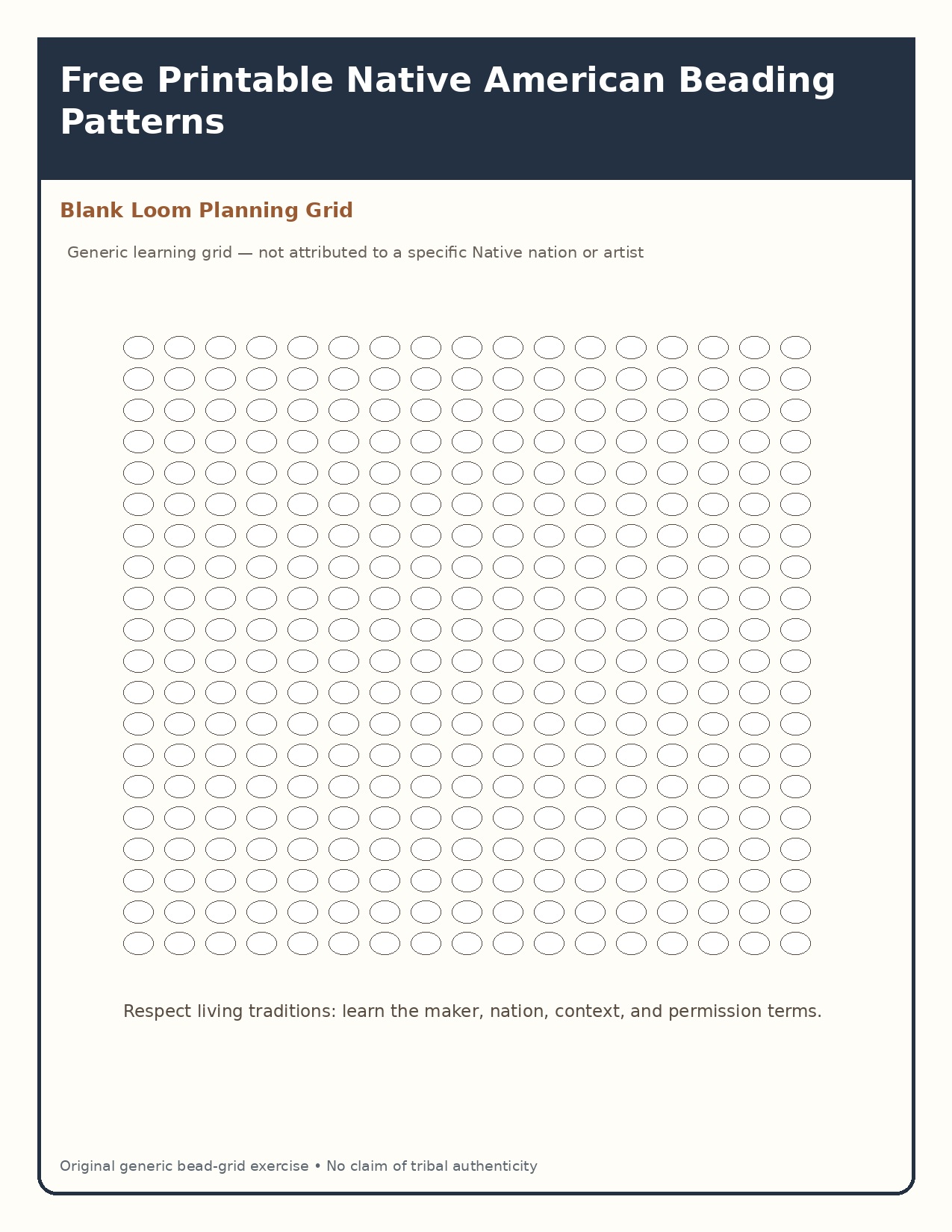
Blank loom bead-planning grid
How to use the grids
Choose bead colors, mark one oval per bead, and test a short row before starting a long strip. The blank grid can be used to plan a name band or an original geometric repeat. Record bead size, thread, needle, and finished width in the margin.
Learning respectfully
- Identify the artist or maker whenever possible.
- Learn the specific nation and regional context instead of using “tribal” as a generic style label.
- Do not copy sacred, ceremonial, or restricted designs.
- Buy patterns and finished work directly from Native artists when available.
- Follow the artist’s license for teaching, sale, and reproduction.
FAQ
Are these authentic Native American patterns?
No. They are original generic practice grids provided specifically to avoid false cultural attribution.
Where can I study documented beadwork?
The National Museum of the American Indian provides collections and educational material that identify objects by people, place, period, and maker when known.