Investment Policy Statement Sample Template
Investment Policy Statement Sample Template
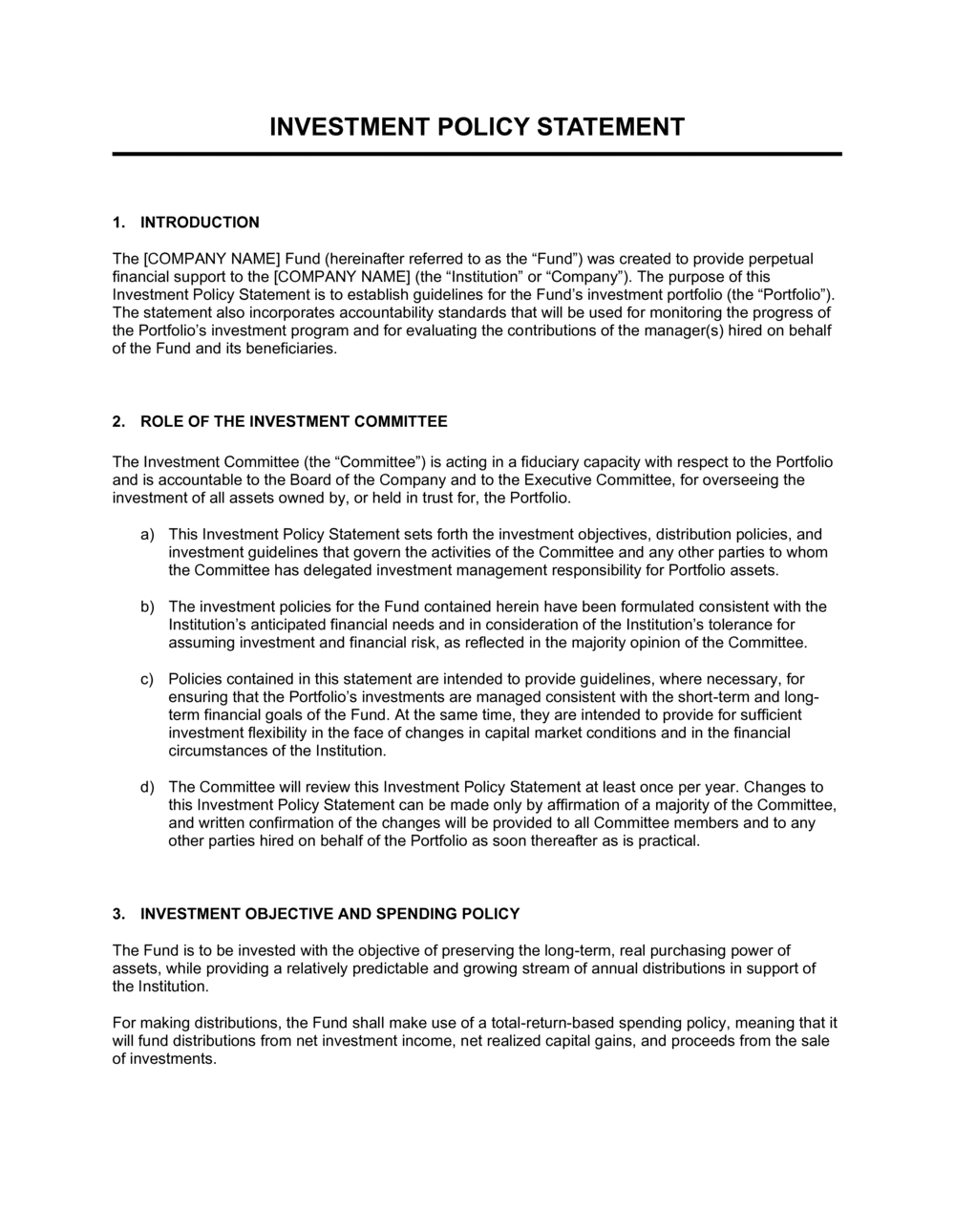
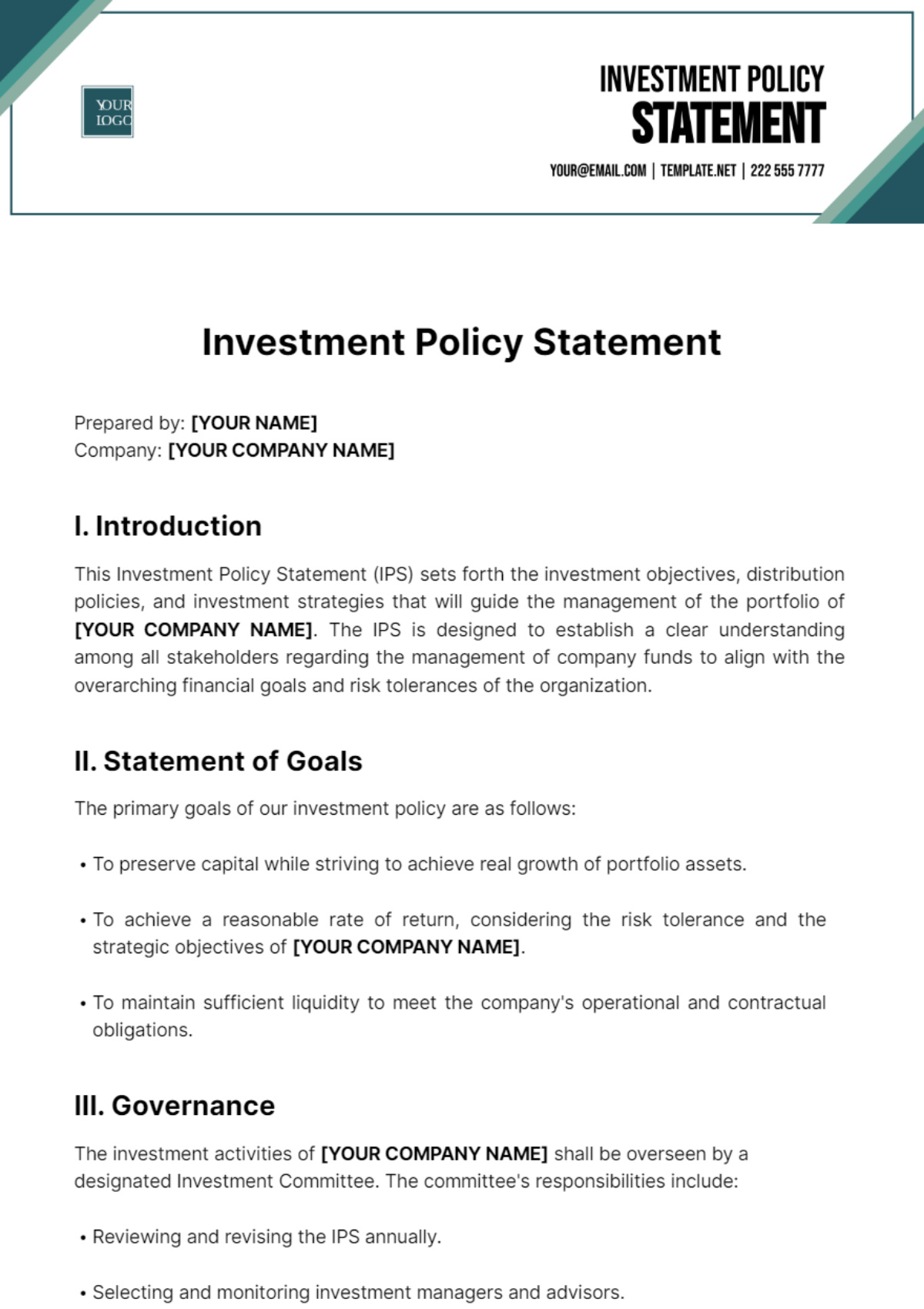
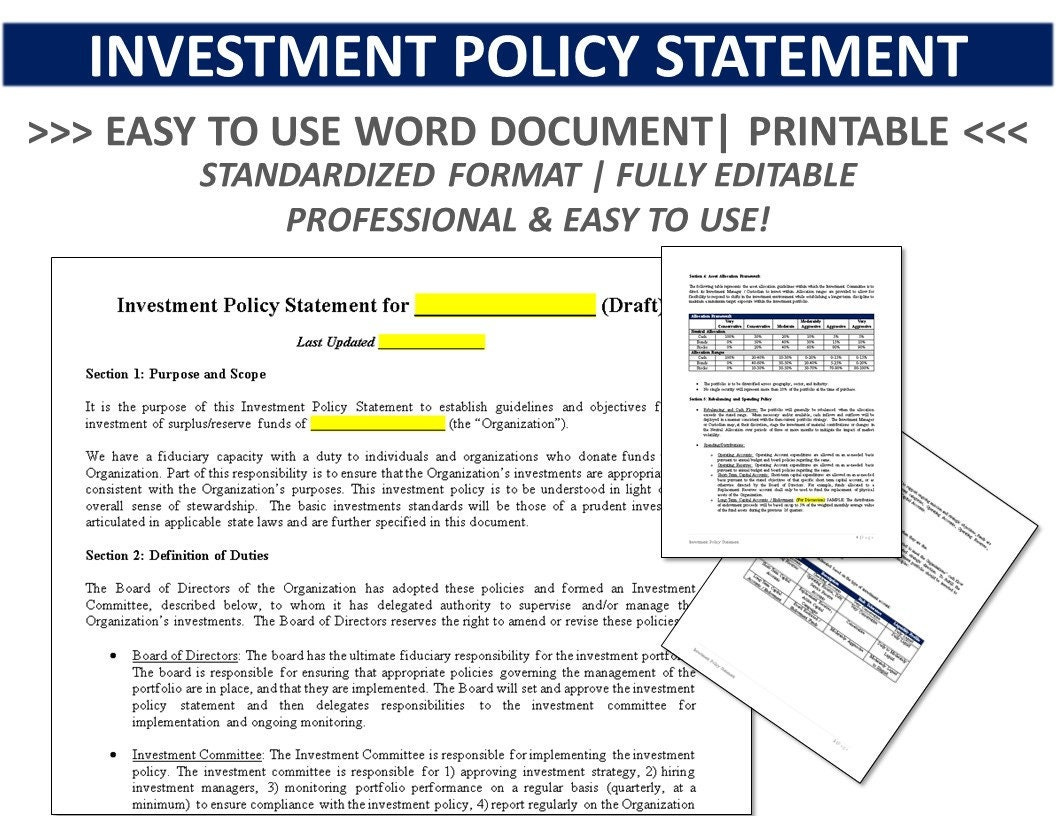
Are you looking to take control of your investments and set clear guidelines for your financial future? An Investment Policy Statement (IPS) can help you do just that! An IPS is a document that outlines your investment goals, risk tolerance, time horizon, and other important factors to guide your investment decisions. Creating an IPS can provide you with a roadmap to stay on track and make informed investment choices. To make this process easier, we have provided a sample template to help you get started on crafting your very own IPS.
Setting Clear Objectives
The first step in creating your IPS is to establish clear investment objectives. These objectives should be specific, measurable, achievable, relevant, and time-bound (SMART). For example, you may set a goal to achieve a certain rate of return over a specific time period, or to save a certain amount of money for a major expense like retirement or a child’s education. By setting clear objectives, you can better focus your investment strategy and measure your progress towards your goals.
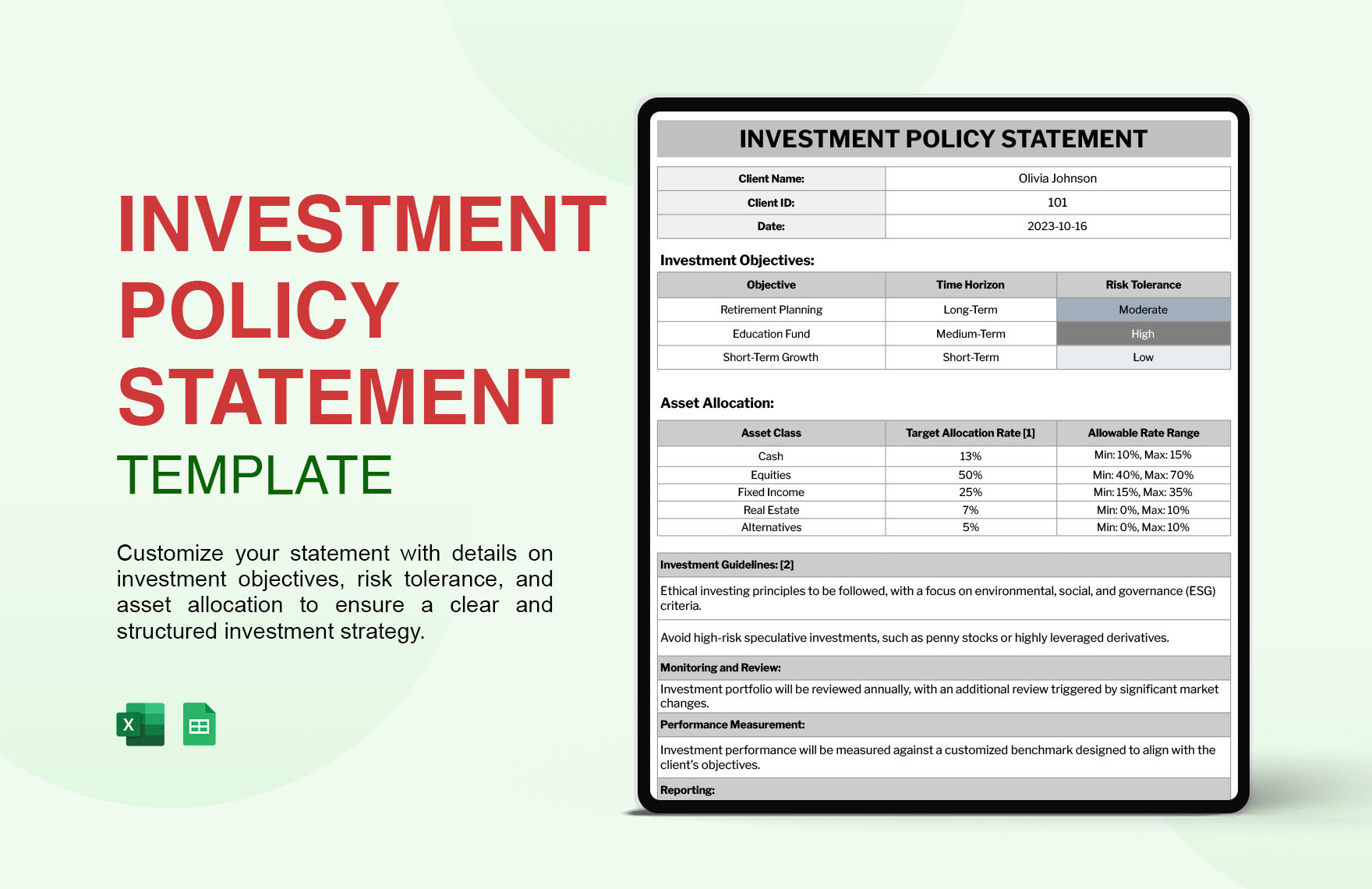
In your IPS, you should also outline your risk tolerance, or how much risk you are willing to take with your investments. This will help guide your asset allocation decisions and ensure that your investments align with your comfort level. Additionally, you may want to include any ethical or socially responsible investing considerations in your IPS, such as avoiding investments in certain industries or companies. By clearly defining your objectives and risk tolerance in your IPS, you can create a framework for making investment decisions that align with your values and goals.
Asset Allocation and Diversification
Another important component of your IPS is determining your asset allocation strategy. Asset allocation is the process of dividing your investment portfolio among different asset classes, such as stocks, bonds, and cash, to achieve a balance between risk and return. Your asset allocation should be based on your investment objectives, risk tolerance, and time horizon. By diversifying your investments across different asset classes, you can reduce the risk of significant losses and potentially increase your overall return over the long term.
In your IPS, you should outline your target asset allocation percentages for each asset class, as well as any permissible ranges around those targets. You may also want to include guidelines for rebalancing your portfolio to maintain your desired asset allocation over time. By clearly defining your asset allocation strategy in your IPS, you can create a disciplined approach to managing your investments and help prevent emotional decision-making during times of market volatility. With a solid asset allocation and diversification plan in place, you can feel confident in your investment strategy and work towards achieving your financial goals.
Creating an IPS is a valuable tool for any investor looking to take control of their financial future and make informed investment decisions. By using a sample template to guide you through the process, you can create a personalized IPS that aligns with your goals, values, and risk tolerance. Take the first step towards achieving your investment objectives today by crafting your own IPS and setting yourself up for success in the years to come.
Investment Policy Statement Sample Template
MORE PRINTABLES…
Disclaimer: The free printables on this website are sourced from various online platforms, including Google and Bing. We strive to credit original creators and link back to them when possible. We do not claim ownership of any content; all copyrights belong to their respective creators.