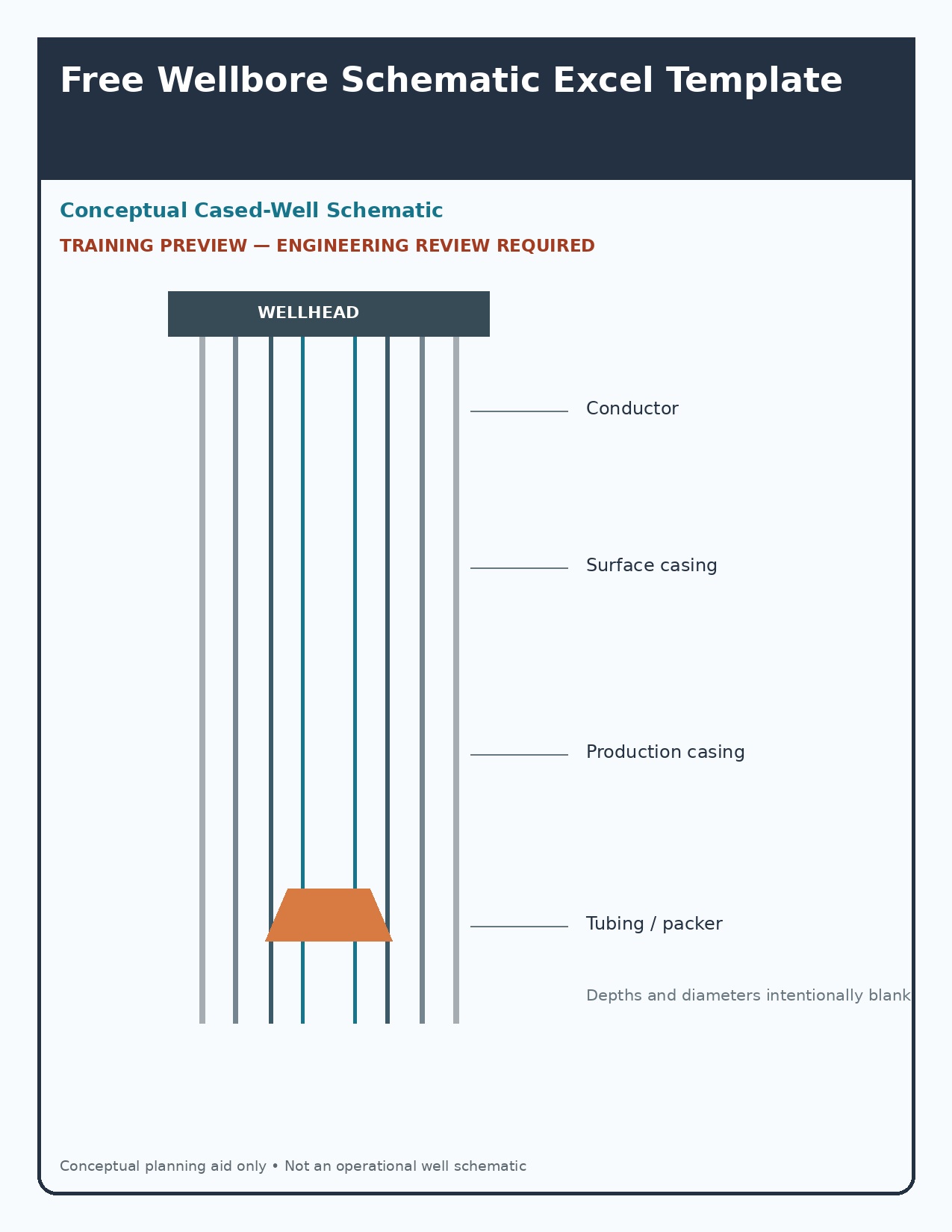
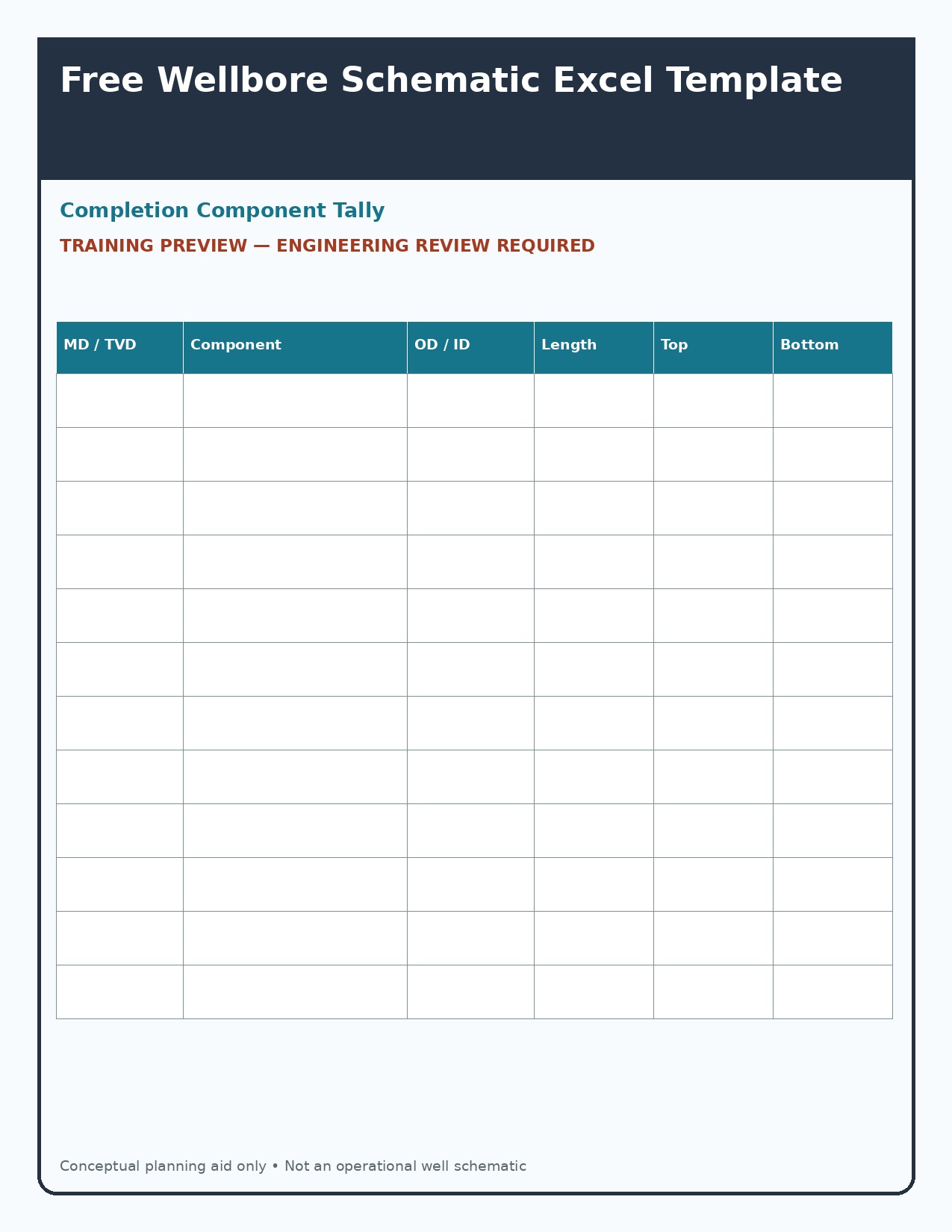
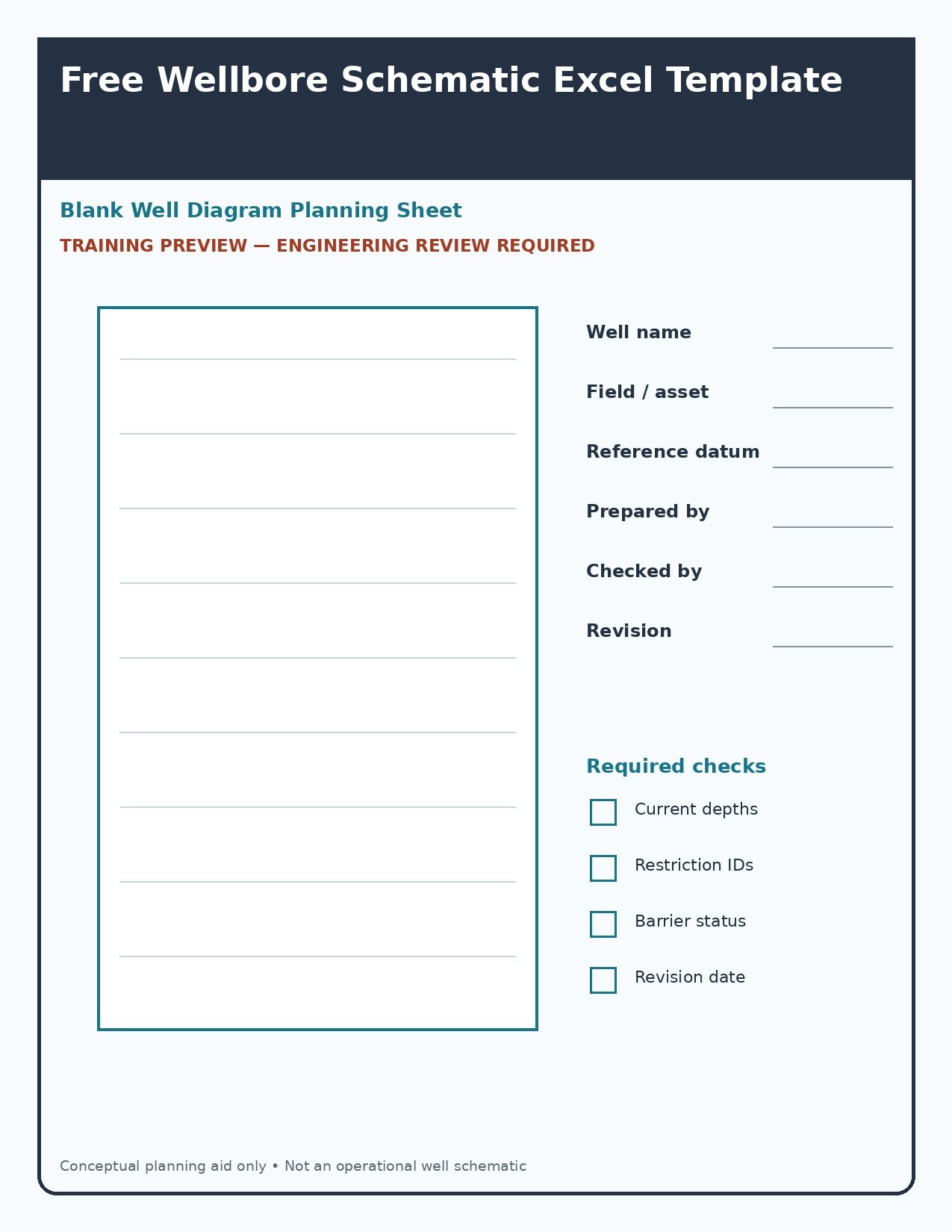
Free Wellbore Schematic Excel Template – A wellbore schematic is not merely a decorative drawing. It identifies principal completion components, dimensions, and depths so engineers can understand the installed configuration and downhole restrictions. The three downloads below are training previews that show useful spreadsheet structures; they are not operational engineering files.
Three purpose-built resources
Conceptual cased-well schematic
Completion component tally
Blank well diagram planning sheet
How to use these resources
- Record the reference datum and distinguish measured depth from true vertical depth.
- Identify casing, tubing, packers, wellhead equipment, restrictions, and status.
- Include prepared-by, checked-by, revision, and effective-date fields.
- Reconcile the diagram against controlled source records before intervention.
Printing and file setup
Open the full-resolution JPG rather than printing a thumbnail. Start with US Letter paper at 100% or Actual Size, then use Fit only if the printer clips the outer edge. Print one test copy before producing a class set, workshop pack, or model-building batch.
Important limitation
Never use a generic or outdated template to select intervention equipment or operating procedures. A qualified engineer must verify the current well configuration.
Frequently asked questions
Are the three downloads identical?
No. Each one serves a different use case, so the layout and content change rather than only the color.
Can I edit the JPG files?
You may add personal notes or labels for your own use. Do not remove safety statements, misrepresent an independent file as official, or resell the unmodified designs.